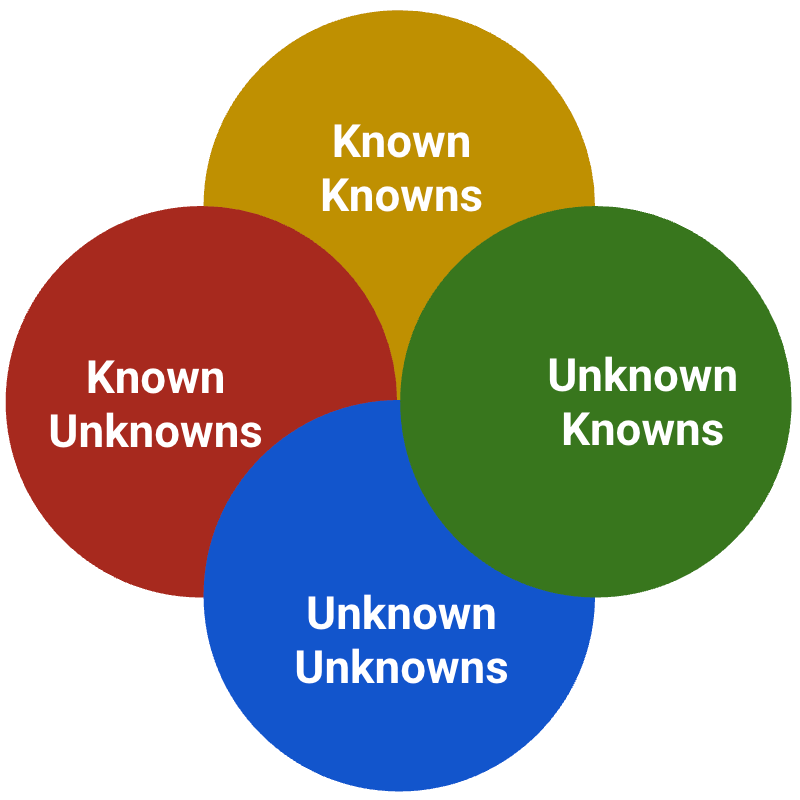
One of the many benefits of working with an experience mentor is that it reduces risk. A helpful way of framing this is to view it through the lens of the known/unknown matrix made famous by Donald Rumsfeld, the two-time US Secretary for Defence.
Four Domains of Risk
It can be helpful to categorise risks involved with a situation or venture into the four domains made famous by Donald Romsfeld:
- Known Knowns
- Known Unknowns
- Unknown Knowns
- Unknown Unknowns
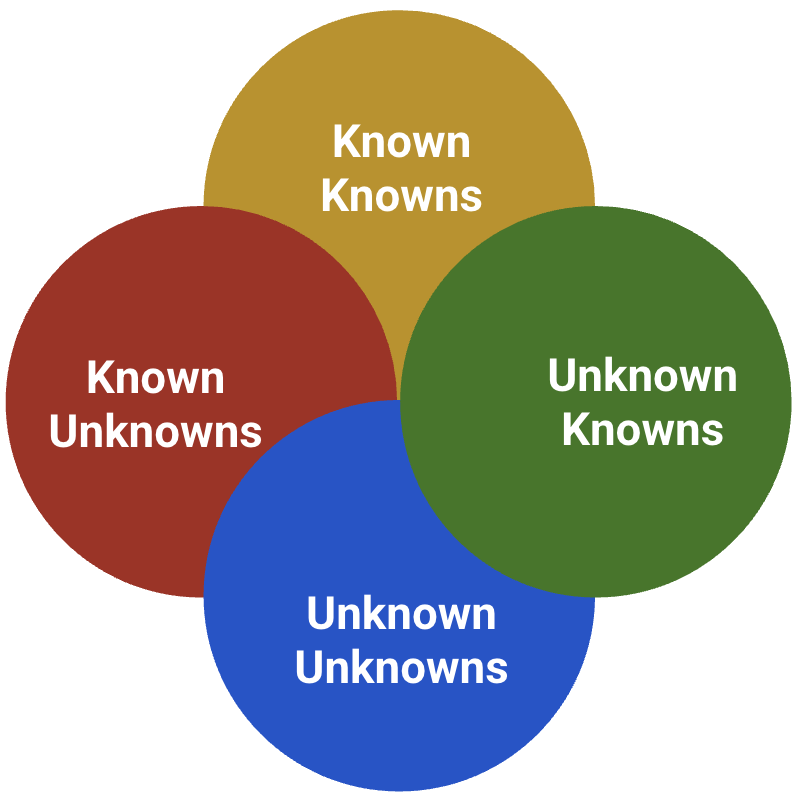
Let’s explore what this looks like in the context of an ERP implementation and how a mentor can help.
Known Knowns
For an organisation embarking on an ERP implementation, this includes all the things you already know about your organisation, your current systems, your people, processes, data and integrations.
You have these facts at your fingertips, or can get your hands on them very quickly.
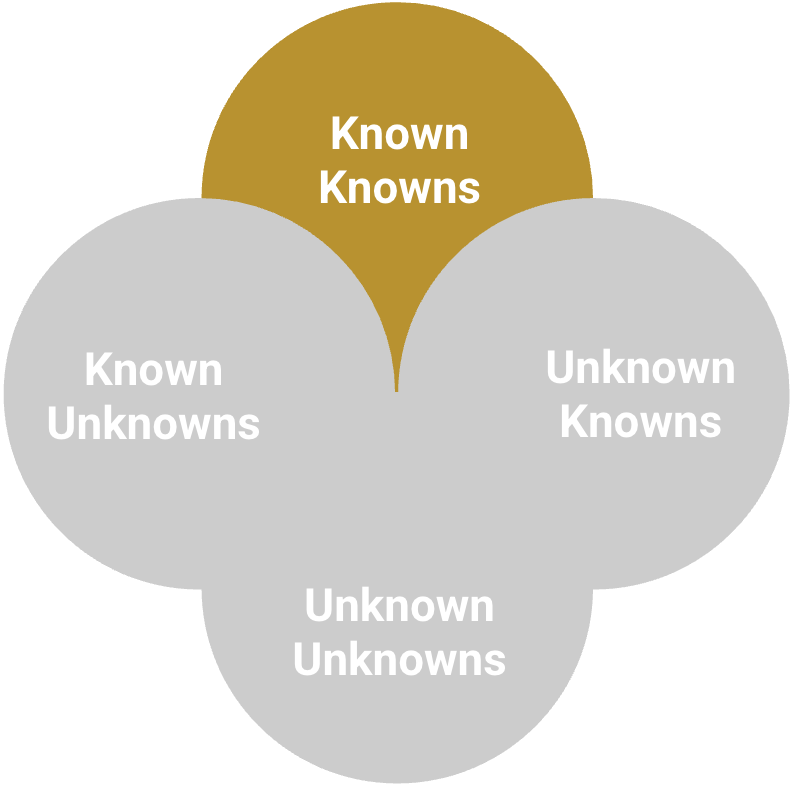
If there are gaps in your knowledge about your current estate then you can and should address these before you begin your implementation.
The things in this category normally represent the lowest risk.
Known Unknowns
This domain includes all the things you know you need to learn or discover. This are often identified on your risk log.
You may not have chosen your target ERP technology yet, but you know you will need to make a product selection and find an SI to be your implementation partner.
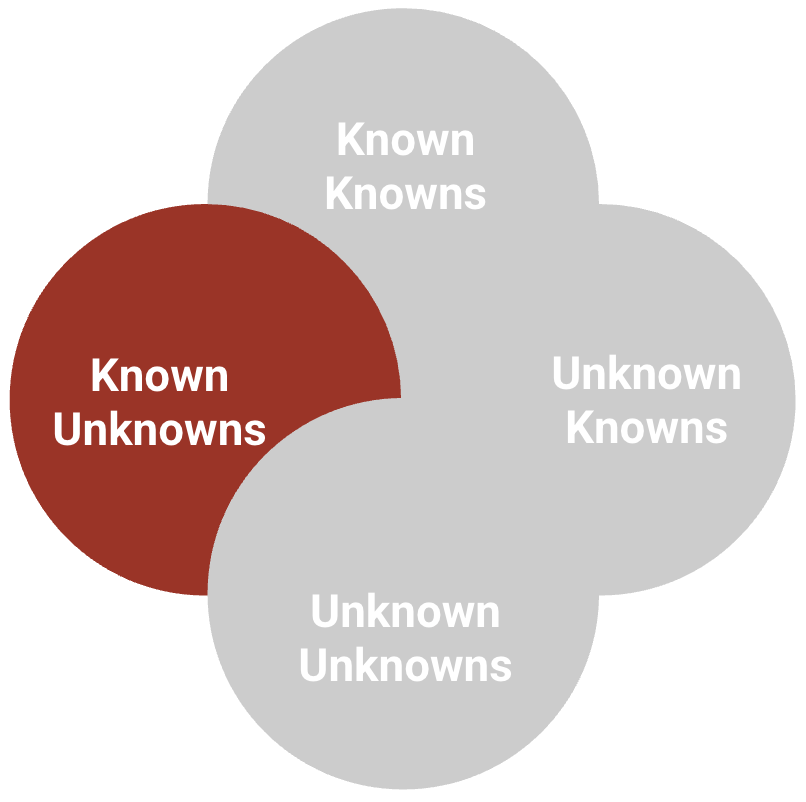
You know you will need to work with the SI to get it configured, but you don’t yet know the configuration options.
You know you will need to train your people in the new system, but you don’t yet know how.
You know you will have to test it, although you don’t know what issues you will find.
A mentor can help you identify all these unknowns and may be able to help make some of these known to you, moving them into the lowest risk category.
Unknown Knowns
This includes all those things you don’t know that others do. These are the things that typically end up in your lessons learned report after the programme. These will typically end up as risks to be managed.
If this is your first ERP implementation then there will be lots in this category.
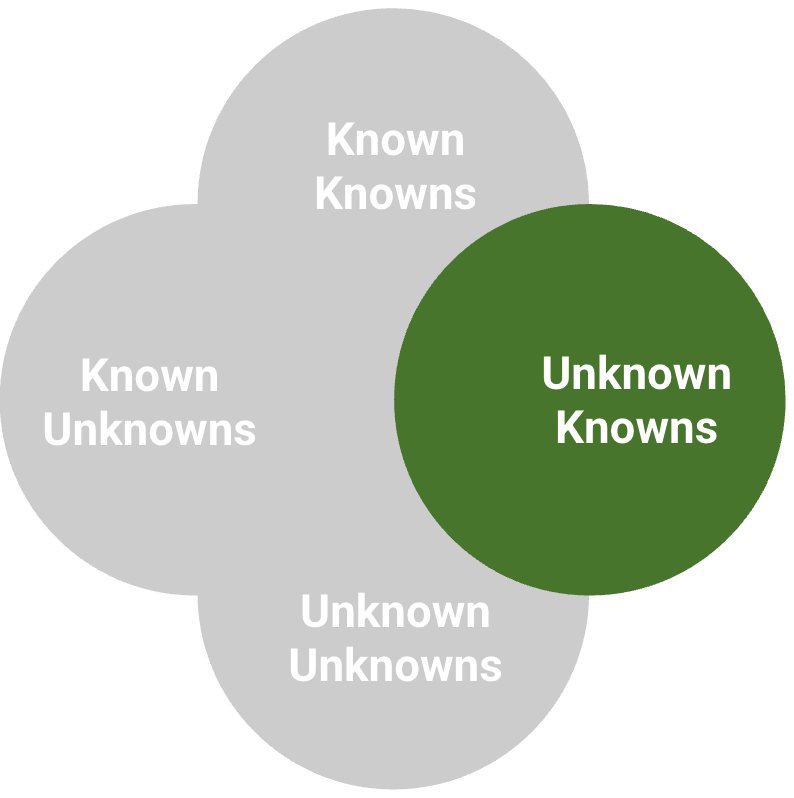
This is where a mentor can be of huge value: their hard-earned experience will enable them to advise you of all the things you can’t know unless you have already lived through an ERP implementation. They can remove whole collections of potential issues, that could increase the cost and time of the programme, by moving them into the Known Known or Known Unknown categories.
Unknown Unknowns
These are the things that nobody knows: they are the natural disasters, international events, political upsets or changes in legislations that no-one saw coming.
They will also end up on your issues log, but are unlikely to feature on your lessons learned report because they are unlikely to be repeated.
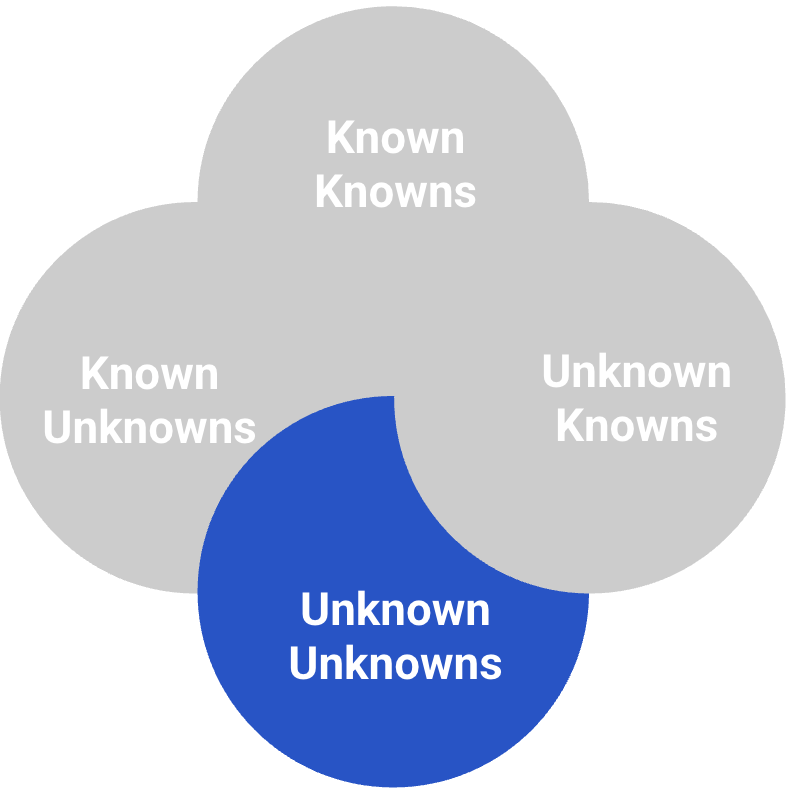
A mentor can help you react to these through their experience of dealing with these sort of issues themselves. They can help you navigate your way to an optimal solution for your programme and your organisation.
Conclusion
Known Knowns can be considered the risks that have been addressed or mitigated.
Known Unknowns are the risks you have identified and are managing.
Unknown Knowns are the risks that you could have avoided with the right advice.
Unknown Unknowns are those risks that no-one could have predicted.
An ERP mentor can help reduce risks, avoid issues and respond better to those risks and issues that emerge.
To learn how you can get your own ERP mentor visit erp-mentor.com or email support@erp-mentor.

